

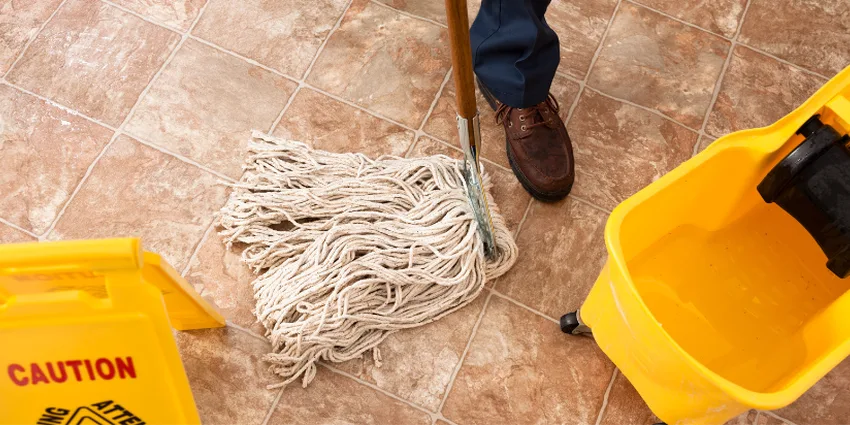
It's 4:30 p.m. on a rainy Thursday in Midtown. The last hour has moved maybe 180 customers through your doorway, each one bringing a square inch of sidewalk and a dime-sized puddle. Your opening-shift mop treatment stopped mattering around noon. This is the moment that defines retail cleaning for high-traffic storefronts — and the moment most daily cleaning routines fail.
NYC storefronts face a cleaning problem that doesn't look like other commercial cleaning. Pedestrian volume is higher, outdoor contaminants are grittier, seasonal weather is more punishing, and the sales floor can't close for cleaning. Daily sweeping isn't the answer. Spending more on nightly cleaning isn't either. The answer is a floor-care system that catches soil at the door, removes it quickly where it lands, and schedules the work equipment can't do during business hours.
This guide covers the floor-care tactics that actually work in a busy NYC retail space, how to adapt them seasonally, and when professional NYC retail floor cleaning services earn their keep over in-house effort.
How NYC Foot Traffic Affects Retail Floor Cleanliness and Safety
NYC retail floors face conditions that most commercial floor care guidance understates. Pedestrian density, construction dust, winter road salt, and continuous entrance use combine into a maintenance load that outruns a once-a-day cleaning routine.
What ends up on your sales floor on a typical day:
- Gritty soil — fine abrasive particles from sidewalks and streets that act like sandpaper under foot traffic
- Moisture — rain, slush, and sweat; invisible in small amounts, dangerous in combination
- Road salt residue in winter — a white film that keeps re-emerging after it looks dry
- Construction dust — fine particulate from the perpetual scaffolding one block over
- Grease and food residue near corner delis, coffee shops, and food courts
- Pollen and seasonal debris in spring and fall
Flooring material changes how each of those behaves. A Midtown clothing boutique with porcelain tile tolerates aggressive scrubbing but shows every streak. A neighborhood grocery with VCT needs frequent recoating under the beverage cooler aisle. A specialty retailer with engineered hardwood near Union Square can't tolerate standing moisture at all. One cleaning plan does not cover all three.
And safety matters. Wet floors near entrances are the single most common slip-and-fall exposure a retailer carries. OSHA's Walking-Working Surfaces standard requires floors to be kept in a clean and, so far as possible, dry condition — a reminder that floor care is a workplace safety obligation, not just an aesthetic one.
Why Regular Retail Floor Cleaning Matters for Customer Experience and Safety
Clean floors are the single most visible operational signal a customer reads about your store, usually before they look at merchandise. A sticky entrance tells a different story than your merchandising spent all week constructing.
What consistent floor care helps protect:
- First impressions — the entryway sets the frame for the whole visit
- Customer comfort — unobstructed, dry walkways make browsing feel safe
- Employee safety — associates are on their feet all day, and they fall first
- Flooring longevity — abrasive grit left in traffic lanes grinds the finish off in months, not years
- Maintenance cost — preventive catches soil before it embeds; restoration is the expensive alternative
- Operational flow — planned cleaning stays out of selling hours
Picture two neighborhood specialty stores with similar foot traffic. One runs a documented morning entrance check, responds to spills within minutes, and schedules quarterly scrubbing on the hard floors. The other cleans when dirt becomes obvious. After six months, the finish in the second store's traffic lanes is visibly worn, the grout is darker in high-traffic aisles, and the entrance has a persistent dullness no mopping removes. Both spent similar hours on cleaning. Only one spent them where it counted.
Daily Retail Floor Cleaning Strategies for High-Traffic NYC Stores
Five tactics do most of the work. None are optional in an NYC storefront.
A. Install and maintain real entrance matting
Entrance matting is the single highest-leverage control in retail floor care, and the most commonly undersized. Industry guidance from janitorial trade sources and matting manufacturers converges on a familiar range: roughly 10 to 15 feet of combined walk-off matting at an entrance captures the majority of tracked-in soil. Many NYC storefronts run three feet of matting and wonder why dirt reaches the back wall.
A workable layout for a high-traffic entrance:
- Scraper mat outside the door — removes the heavy debris before the shoe lifts
- Scraper-wiper mat immediately inside — knocks off remaining grit and absorbs initial moisture
- Absorbent mat extending further in — captures the last of the moisture before it reaches hard flooring
Inspect saturated mats hourly in wet weather. Replace or swap for dry ones when they stop absorbing. Keep edges flat and secure — a curled mat edge is both a trip hazard and a sign the mat has outlived its grip.
B. Remove dirt and debris frequently
Dust-mop or vacuum entrances, main aisles, checkout, and fitting rooms through the day — not just at close. Abrasive grit under foot traffic grinds floor finish away faster than any other wear factor, and removing it costs minutes, not dollars.
C. Respond to spills immediately
Isolate the area with a wet-floor sign, absorb the liquid with the appropriate tool, clean any residue, dry thoroughly, and reopen only when the surface is dry. OSHA's standard treats wet floors as a known hazard; so should your associates.
D. Match products to the flooring
Follow the flooring manufacturer's cleaning instructions and the product label. Harsh chemistry on a sealed hardwood or waxed VCT can strip finish faster than the traffic itself. Over-wetting porous stone can etch it. When in doubt, test in an inconspicuous area.
E. Keep a consistent schedule
Open with an inspection. Spot-check through the day. Respond to spills immediately. Finish with full nightly cleaning. Then adjust frequency when weather or traffic changes, which in NYC means weekly.
Daily floor-care checklist
- Inspect entrance matting and swap if saturated
- Dust-mop or vacuum main traffic lanes mid-morning and mid-afternoon
- Check and reset wet-floor signage near the entrance in bad weather
- Spot-respond to spills within minutes, with signage before cleaning
- Full floor cleaning at close with floor-appropriate chemistry
- Walk the store floor before locking up and note recurring problem zones
How to Protect Retail Floors From NYC Weather and Seasonal Dirt
Seasonal conditions should actively reshape your floor-care routine — not just add occasional "deep clean" line items.
| Season | Primary challenge | Recommended response |
|---|---|---|
| Winter | Road salt residue, slush, extended wet conditions | Neutral-pH salt-residue cleaner compatible with your flooring; mats swapped multiple times a day; frequent entrance inspection |
| Spring | Pollen, early-season rain, melting runoff | Increased dust mopping; mat rotation as rain returns |
| Summer | Dust, heat-related sweat, intermittent storms | Standard daily routine with faster spill response during storms; hard-floor scrubbing between seasonal peaks |
| Fall | Leaves, early salt applications, holiday traffic buildup | Reinspect mat sizing before winter; pre-season deep clean to start winter at baseline |
Winter deserves its own emphasis. Road salt residue is often what customers see as a persistent white haze on hard floors through February and March. Water alone leaves it behind. A neutral-pH cleaner designed for salt removal — matched to your flooring — is the right tool. For the equipment and chemistry side of commercial floor care, see our commercial floor cleaning services.
When to Hire Professional NYC Retail Floor Cleaning Services
Bring in a professional provider when the work needs commercial equipment, specialized chemistry, or scheduling your staff can't absorb during business hours. Daily routines handle surface soil; embedded soil, finish restoration, and grout work don't bend to a mop and bucket.
Where professional commercial floor care typically earns its cost:
- Commercial auto-scrubbing for hard floors with embedded soil in traffic lanes
- Grout cleaning and resealing on tile surfaces where routine mopping no longer reaches
- Floor polishing and refinishing — distinct from cleaning, with different outcomes
- Carpet extraction on retail carpet or runner mats
- After-hours and early-morning service that keeps the sales floor empty during cleaning
Questions to ask a retail cleaning provider
- Have you worked with my specific flooring material, and what chemistry do you use on it?
- Can you work after-hours or before opening without disrupting operations?
- What equipment will you bring on site, and how is it stored or removed?
- Who is my named account manager, and how fast is your response window?
- What is included in the base price, and what triggers additional charges?
- Can I see your general liability and workers' compensation certificates with my store named as additional insured?
The vendor evaluation principles are the same ones in our guide to cleaning contractor cost economics — normalize bids by labor hour, not monthly fee, and treat crew consistency as the variable that quietly costs the most to get wrong.
How to Create a Retail Floor Maintenance Schedule That Works
A written schedule is what turns scattered cleaning activity into a reliable program. One page is enough.
| Frequency | Suggested tasks |
|---|---|
| Throughout the day | Entrance inspection, spill response, visible debris removal, wet-floor signage |
| Daily (close) | Full floor cleaning using material-appropriate methods |
| Weekly | Review high-traffic areas, address recurring soil buildup, mat cleaning or rotation |
| Periodic | Scrubbing, grout cleaning, polishing, or refinishing as the floor condition warrants |
| Seasonally | Review matting size, salt-removal supplies, staffing, and weather procedures |
Takeaway: walk your entrance at 4 p.m. this Thursday. Count how many feet of matting the dirt crosses before it reaches merchandise. If that number is under 10, the fix starts at the door — not at the mop closet.
Retail Floor Cleaning FAQs
How often should high-traffic retail stores in NYC clean their floors?
Match frequency to actual traffic and weather, not calendar. Entrances need inspection and spot cleaning multiple times a day during wet weather. Main aisles and checkout areas need daily vacuuming or dust mopping. Full floor cleaning typically runs nightly for most NYC storefronts. Periodic deep work — scrubbing, grout cleaning, polishing or refinishing — runs quarterly to semiannually depending on surface and traffic. A busy Fifth Avenue boutique and a quiet neighborhood specialty store don't share a schedule.
What is the best way to protect retail floors from NYC street dirt, rain, and road salt?
Three controls do most of the work: a properly sized entrance matting system (industry guidance suggests 10 to 15 feet of walk-off matting captures the majority of tracked-in soil); fast inspection and spot response at the entrance during wet weather; and winter salt removal using a neutral-pH cleaner compatible with your flooring material. Salt residue left on hard floors can damage finishes over time, and water alone doesn't dissolve it fully.
Why should NYC retailers invest in professional commercial floor cleaning?
Daily sweeping and spot cleaning handle surface soil, but soil embedded in grout, finish buildup, and traffic lanes needs commercial scrubbing equipment and material-appropriate chemistry. Professional floor care also runs on schedules — after hours, early morning — that keep the sales floor clear during business hours. The trade-off isn't luxury vs. frugal; it's protecting the flooring investment you already made versus replacing it earlier.
How much walk-off matting does a retail store need?
Industry guidance commonly cited by matting manufacturers and janitorial trade sources suggests 10 to 15 feet of combined scraper and absorbent matting at an entrance to capture the majority of tracked-in soil. In a high-traffic NYC storefront that often means a scraper mat outside, a scraper-wiper combination immediately inside the door, and an absorbent mat extending further in. Shorter runs leave soil to spread across the sales floor, which costs more to remove than it does to catch at the door.
Make High-Traffic Retail Floor Care a Priority for Your NYC Store
Retail cleaning for high-traffic storefronts in NYC is less about cleaning harder and more about catching soil earlier, matching chemistry to the flooring material, and scheduling the specialized work equipment can't do during business hours. Entrance matting that actually fits the traffic, prompt spill response, floor-compatible products, and seasonal adjustments do more for appearance and surface longevity than any amount of after-the-fact scrubbing.
Review your current routine against the daily checklist above and the seasonal table. If the gaps are entrance-matting size, spill response time, or missing periodic scrubbing, you have a plan — not a crisis. Retail stores in New York, New Jersey, and Pennsylvania can request an estimate for a customized floor-care plan, or read more about our commercial floor cleaning services.
Sources & notes
- Walking-Working Surfaces standard (29 CFR 1910.22), general requirements for clean and dry floors — U.S. Occupational Safety and Health Administration
- Entrance matting guidance of 10 to 15 feet is a commonly cited industry range from matting manufacturers and janitorial trade sources, not a regulatory requirement. Needs vary with traffic and weather.
- Follow your flooring manufacturer's care instructions and product labels. This article is general guidance.

Written by
Nina BacabacDirector of Operations, ProCleanings
Nina oversees scheduling, staffing, and day-to-day service delivery across ProCleanings' client sites in New York and New Jersey — turning scopes of work into cleaning that shows up the same way every time.